Antonio Fazio, aka “ato”, is an Italian art director and designer born in Switzerland in 1984.
A graduate of Eracom Lausanne (2010), he has lived, worked, and lectured across Paris, New York, and Milan, and is now based in Zürich. His work spans fashion, luxury, and sport, with clients including Prada, Versace, Maserati, Swatch, Hennessy, Adidas and the NBA.
© 2025 Antonio Fazio. All rights reserved.
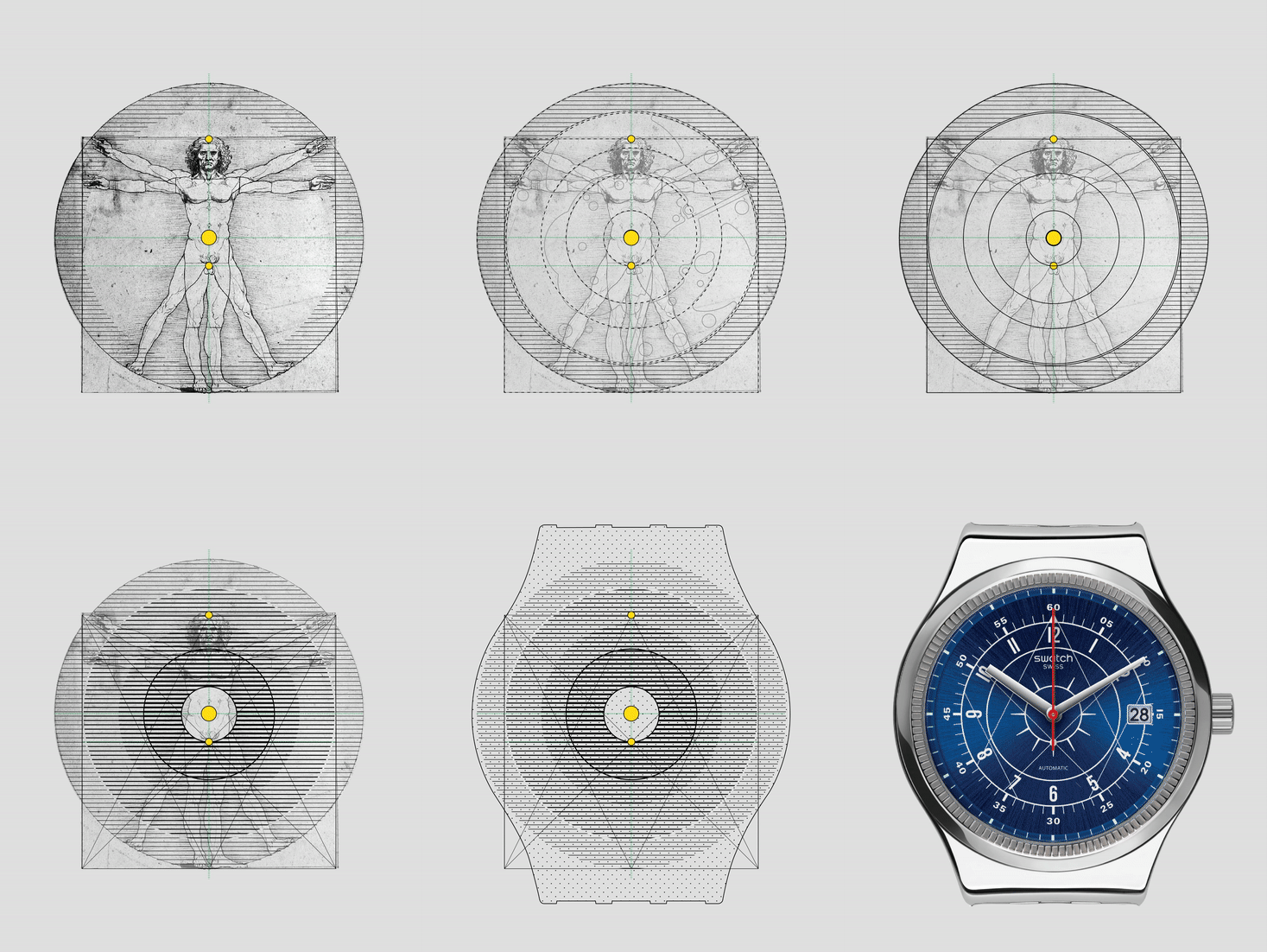
Swatch S51 I. /
1. Visual Concept

Project Sistem51 “Irony”
“Product Identity” Familiarization Manual, first part.
March, 2015
“Product Identity” Familiarization Manual, first part.
March, 2015
The Vitruvian Man, Italian: Le proporzioni del corpo umano secondo Vitruvio or simply L’Uomo Vitruviano, is a drawing by Leonardo da Vinci around 1490. It is accompanied by notes based on the work of the architect Vitruvius.
The drawing, which is in pen and ink on paper, depicts a man in two superimposed positions with his arms and legs apart and inscribed in a circle and square. The drawing and text are sometimes called the Canon of Proportions or, less often, Proportions of Man.
The drawing is based on the correlations of ideal human proportions with geometry described by the ancient Roman architect Vitruvius in Book III of his treatise De Architectura. Vitruvius described the human figure as being the principal source of proportion among the Classical orders of architecture. Vitruvius determined that the ideal body should be eight heads high. Leonardo’s drawing is traditionally named in honor of the architect.
“Leonardo believed the workings of the human body to be an analogy for the workings of the universe.”
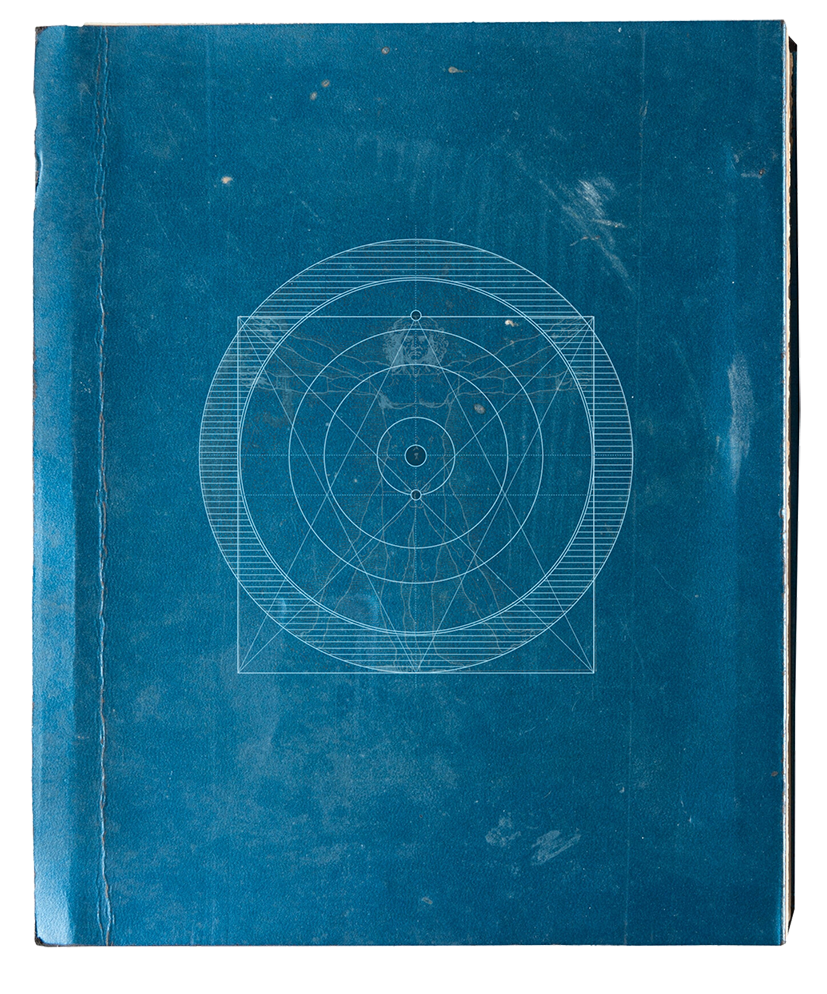

S51 Irony /
Leonardo Da Vinci’s Vitruvian Man.
Human proportion. Around 1490.
![]()
S51 Irony /
Leonardo Da Vinci’s Vitruvian Man.
Associated with the Fibonacci Sequence.
Leonardo Da Vinci’s Vitruvian Man.
Human proportion. Around 1490.
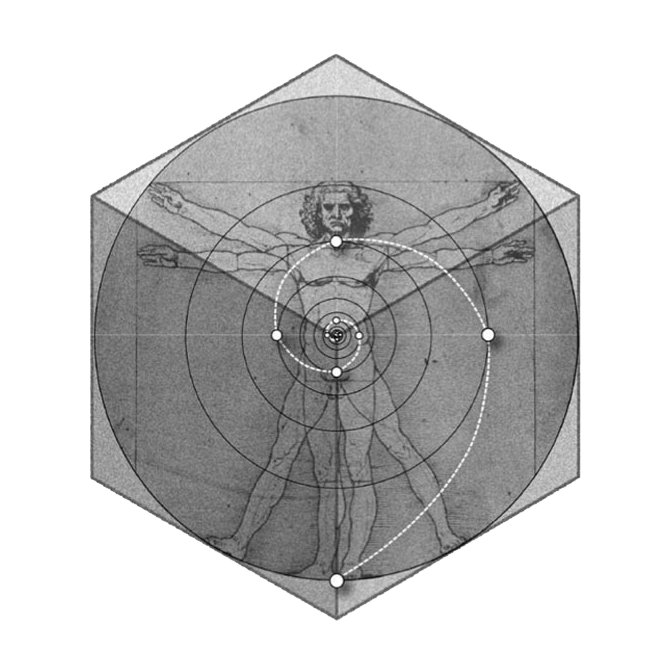
S51 Irony /
Leonardo Da Vinci’s Vitruvian Man.
Associated with the Fibonacci Sequence.